How to Handle a Plumbing Emergency Insurance Claim
Your Step-by-Step Guide to Making a Successful Water Damage Claim
A plumbing emergency is stressful enough without the added anxiety of navigating an insurance claim. The good news is that many types of plumbing-related water damage are covered by standard home and contents insurance in Australia. The bad news is that claims are regularly denied — often because of how the homeowner responded in the first 24 to 48 hours. This guide walks you through the process step by step so you can protect your property and your claim.
What Types of Plumbing Damage Are Typically Covered?
Most home insurance policies in Australia cover sudden and accidental water damage — meaning damage that was unexpected and not the result of ongoing neglect. This typically includes burst pipes, flexi hose failures, hot water system bursts, sudden leaks from concealed plumbing, and water damage caused by a plumbing emergency that occurred without warning.
What is generally not covered is gradual damage — leaks that have been developing over weeks or months, damage from poor maintenance, blocked drains caused by neglect, and water damage that the insurer determines you should have been aware of and addressed. This is why responding quickly to a plumbing emergency is so important — it demonstrates that the damage was sudden, that you took immediate action to mitigate it, and that you engaged a qualified professional promptly.
Every policy is different, and the specific terms of your cover will determine what is and is not included. Always review your Product Disclosure Statement (PDS) or contact your insurer directly for definitive advice on your cover.
How to Make a Plumbing Emergency Insurance Claim
Follow These Steps in Order
Step 1 of 7
1
Stop the Damage
Your first priority is to stop the source of water damage. Turn off the main water supply, isolate the affected fixture, and call a licensed emergency plumber. Insurers expect you to take reasonable steps to mitigate damage — delaying this can reduce or void your claim.
Step 2 of 7
2
Document Everything Before Clean-Up
Before you start mopping up, take comprehensive photos and video of the damage from multiple angles. Photograph the source of the leak, the extent of water spread, any damaged belongings, and the affected structure (walls, ceilings, flooring). Include wide shots showing the full scope and close-ups of specific damage. This is your most important evidence.
Step 3 of 7
3
Call Your Insurer Within 24–48 Hours
Most policies require notification within a specific timeframe — typically 24 to 48 hours. Call your insurer’s claims line, provide a description of what happened, and ask for a claim number. Keep a written record of every call including the date, time, and the name of the person you spoke to.
Step 4 of 7
4
Get a Professional Plumber’s Report
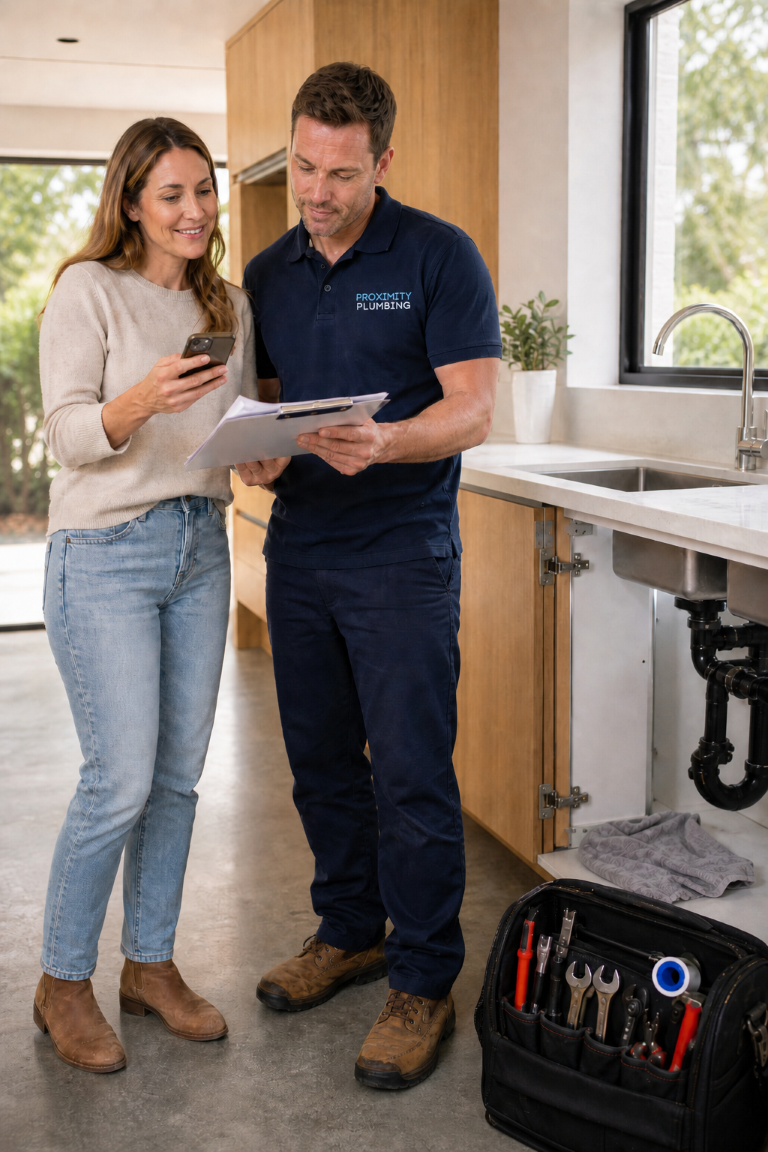
Your insurer will want a report from the licensed plumber who attended the emergency. This report should detail what caused the failure, what repairs were carried out, and whether the damage was sudden and accidental. Proximity Plumbing provides detailed invoices with full descriptions of the work completed, the cause identified, and any warranty documentation.
Step 5 of 7
5
Do Not Dispose of Damaged Items Before Assessment
Your insurer may send an assessor to inspect the damage in person. Do not throw away damaged items, rip out water-damaged materials, or begin major clean-up until the assessor has visited — or until your insurer confirms in writing that you can proceed. If items must be removed for safety or hygiene, photograph them first.
Step 6 of 7
6
Keep All Receipts and Records
Keep every receipt related to the emergency — the plumber’s invoice, any emergency clean-up costs, temporary accommodation if required, and replacement costs for damaged items. Your insurer will need these to process your claim.
Step 7 of 7
7
Follow Up and Track Your Claim
Insurance claims can take time to process. Follow up with your insurer regularly, respond to requests for information promptly, and keep a written log of all communications. If your claim is denied or reduced, ask for a written explanation and consider lodging a complaint with the Australian Financial Complaints Authority (AFCA).
Common Reasons Plumbing Insurance Claims Get Denied
Understanding why claims fail can help you avoid the same mistakes. The most common reasons plumbing-related insurance claims are denied in Australia include gradual damage that the insurer determines was not sudden or accidental, lack of maintenance where the homeowner failed to address known issues, insufficient documentation where the damage was cleaned up before being properly photographed, delayed notification where the homeowner waited too long to contact their insurer, and pre-existing damage that the insurer determines existed before the policy started or before the claimed event.
The single most effective thing you can do to protect your claim is to document the damage thoroughly before you clean up, call your insurer promptly, and use a licensed plumber who provides detailed reporting. At Proximity Plumbing, every emergency job includes a comprehensive invoice with a description of the cause, the work completed, parts installed, and before-and-after documentation where applicable.
How Proximity Plumbing Supports Your Insurance Claim
We understand that the plumbing emergency is only the first part of the problem — the insurance claim that follows can be just as stressful. That is why every Proximity Plumbing emergency repair includes a detailed invoice that clearly describes the cause of the failure, the nature of the damage, the repairs completed, and all parts and materials installed. This documentation is designed to meet the requirements of insurance assessors and make your claim process as smooth as possible.
We also provide warranty documentation for all work completed under our Lifetime Labour Warranty, and our team is available to speak with your insurer or assessor if additional clarification is needed. We cannot guarantee the outcome of any insurance claim — that is entirely between you and your insurer — but we can make sure you have the documentation and professional reporting to give your claim the best possible chance.
Frequently Asked Questions About Plumbing Insurance Claims
In most cases, yes — if the burst was sudden and accidental. Gradual leaks or pipes that have deteriorated due to age or lack of maintenance may not be covered. Check your specific policy or contact your insurer.
Generally, no. Blocked drains are considered a maintenance issue. However, if a sudden blockage caused water damage to your property (such as sewage backup flooding your home), the resulting damage may be covered even if the unblocking itself is not.
No. You have the right to choose your own licensed plumber in an emergency. In fact, you should call a plumber immediately to stop the damage — do not wait for your insurer to appoint one. Insurers expect you to take reasonable steps to mitigate damage.
Timeframes vary depending on the complexity of the claim and your insurer. Simple claims may be resolved within 2 to 4 weeks. Complex claims involving structural damage, mould remediation, or disputed cause can take several months. Follow up regularly with your insurer.
Ask your insurer for a written explanation of the denial. Review it against your policy terms. If you believe the denial is unfair, you can lodge an internal dispute with the insurer and, if that is unsuccessful, escalate to the Australian Financial Complaints Authority (AFCA) for independent review.
Disclaimer
This guide provides general information only and does not constitute legal, financial, or insurance advice. Every insurance policy is different, and the specific terms of your cover will determine what is and is not included. Always review your Product Disclosure Statement (PDS) and contact your insurer directly for advice specific to your situation.
Need a Plumber Right Now?
The sooner you call, the sooner the damage stops — and the stronger your insurance claim. Call Proximity Plumbing now and get to speak to a licensed plumber on call. We will be at your door within 30 minutes — guaranteed.
Hydro Jetting vs Traditional Drain Clearing: Which Is Better?
7 min read
Three Clearing Methods, One Best Choice for Most Sydney Blockages When a plumber arrives to clear a blocked drain, the method they use makes a real difference to how well the blockage is cleared, how....
Blocked Stormwater Drain Solutions for Sydney Residents
8 min read
When the Next Downpour Hits, Your Stormwater System Has One Job A blocked stormwater drain might not seem as urgent as a blocked sewer — until the next heavy downpour sends water pooling around your f....
When Sewage Backs Up, Minutes Matter — Here’s What to Do A blocked drain can go from inconvenience to emergency in a matter of hours. When sewage is backing up into your home, water is pooling around....
Common Causes of Blocked Drains and How to Fix Them
8 min read
Diagnosing the Cause is the First Step to a Permanent Fix If you’re dealing with a blocked drain, you’re not alone — blocked drains are one of the most common plumbing issues we attend across Sydney.....
Not sure where to start? Just give us a call and we’ll guide you through your options step by step. Our team will explain everything clearly, offer expert advice, and if it suits you, we can send someone out today.