

Commercial Hot Water Plant Sydney
Central plant, flow and return, and safe temperatures at every outlet.
24/7 PRIORITY RESPONSE | WORK ORDERS | COMPLIANCE PACK



NOW SERVICING NORTH SYDNEY
WE ARE AVAILABLE
- NSW Contractor Licence 285594C
- 24/7 Priority Response
- 5,183 Commercial Jobs Since 2019
- Report and Photos on Every Job
- Invoices With Your PO and SP Number
- Onsite in 30 Minutes Guaranteed
THE SHORT ANSWER
In short
Proximity Plumbing repairs and replaces central hot water plant in strata and commercial buildings: gas and electric storage, banks of continuous flow heaters, flow and return circulation, relief and tempering valves. Most systems last about 8 to 10 years. We plan replacements before the plant fails, so the building is not without hot water.
HOW IT WORKS
How central hot water plant works
Central plant heats water in one place, usually a plant room, a basement or the roof, and sends it to every lot. It is often a set of gas or electric storage heaters, or a bank of continuous flow heaters feeding a storage tank. A circulating pump keeps hot water moving around a flow and return loop through the risers, so it reaches the tap quickly instead of after a long run of cold.
Between the plant and the outlets, tempering valves or thermostatic mixing valves bring the water down to a safe delivery temperature. Each heater also has a relief valve that lets water out if pressure or temperature climbs too high. A relief valve that releases a little water as the heater warms may be doing its job; one that runs constantly is telling you something has failed.
Because one plant serves many lots, one failure can leave the whole building without hot water. That is the main reason to plan replacements and keep some spare capacity.
THE SIGNS
Signs the plant needs attention
- Lukewarm or slow hot water on upper floors
- Relief valves weeping or discharging
- Rust at the base of a tank
- Units more than 8 to 10 years old
- Rising gas or power bills
- Repeat call-outs for no hot water
HOW URGENT IS IT?
Is it urgent?
| What you notice | What it usually means | How urgent |
|---|---|---|
| No hot water anywhere in the building | A failed heater, burner or element, a tripped supply or a stopped pump | Urgent. Log it straight away and tell us how many lots are affected |
| Water pouring from a relief valve or the base of a tank | A failed valve, too much pressure, or a tank that has rusted through | Urgent. If it is safe, turn off the cold supply to that unit and call us |
| Lukewarm hot water on the upper floors only | The circulating pump or a balancing valve on the flow and return loop | Soon. Book a check; it rarely fixes itself |
| Water at an outlet much hotter than usual | A tempering valve or TMV has failed | Urgent. Stop using that outlet until it is checked |
| Heaters approaching 8 to 10 years old | The end of their usual working life | Plan. Price the replacement now, before a winter failure |
WHAT CAUSES IT
Why central plant fails
Tanks corrode from the inside as the anode wears out, valves wear, and circulating pumps fail. Plant sized decades ago may no longer keep up with the building’s demand.
HOW WE DIAGNOSE IT
How we assess it
We check each unit’s age and condition, the relief and tempering valves, the circulating pump and the temperatures at the plant and at outlets, then advise repair, partial replacement or a full upgrade.
BEFORE AND AFTER
See the difference
Old units out, the right new system in. Drag the handle to compare.
Leaking electric unit
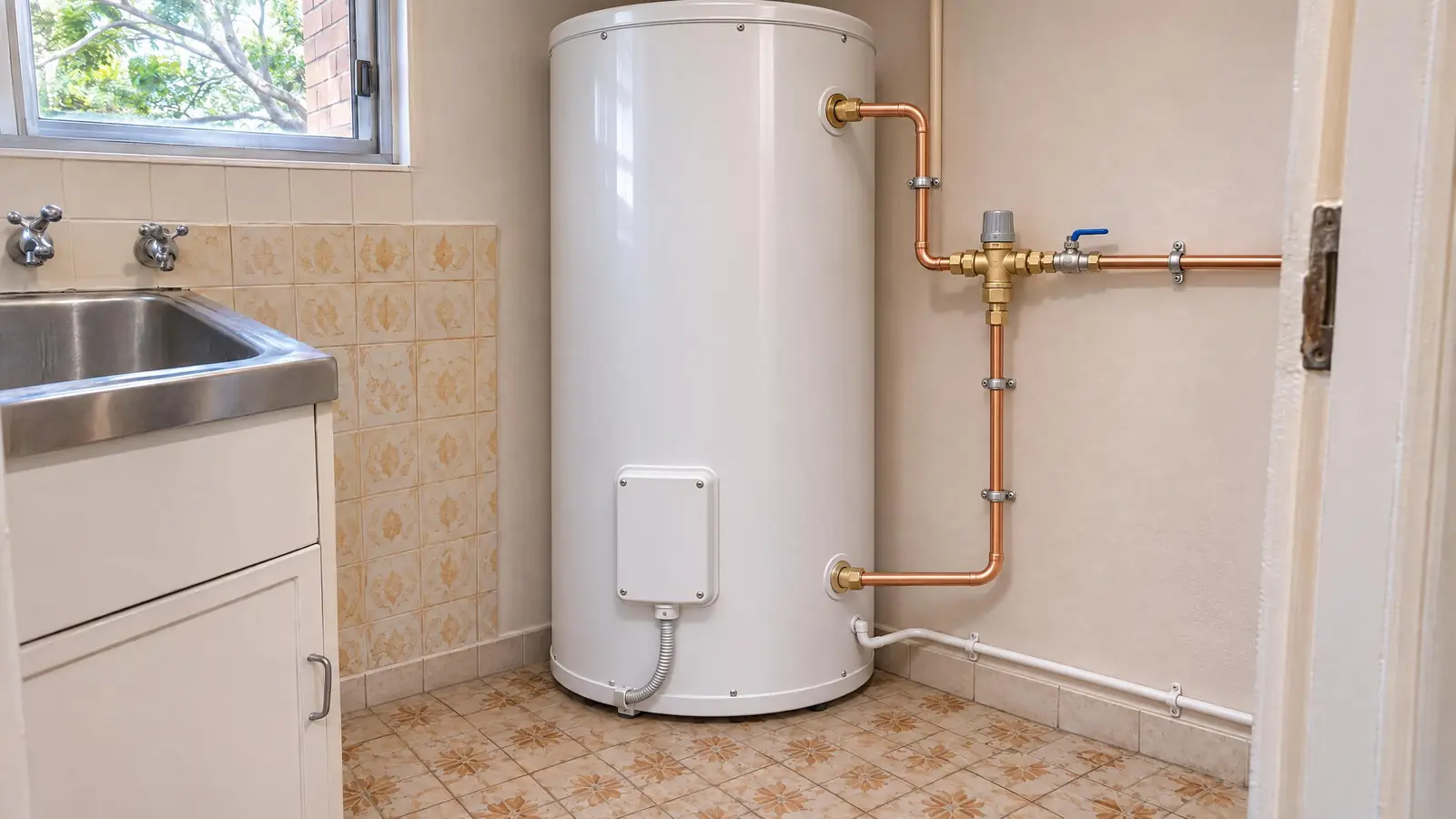
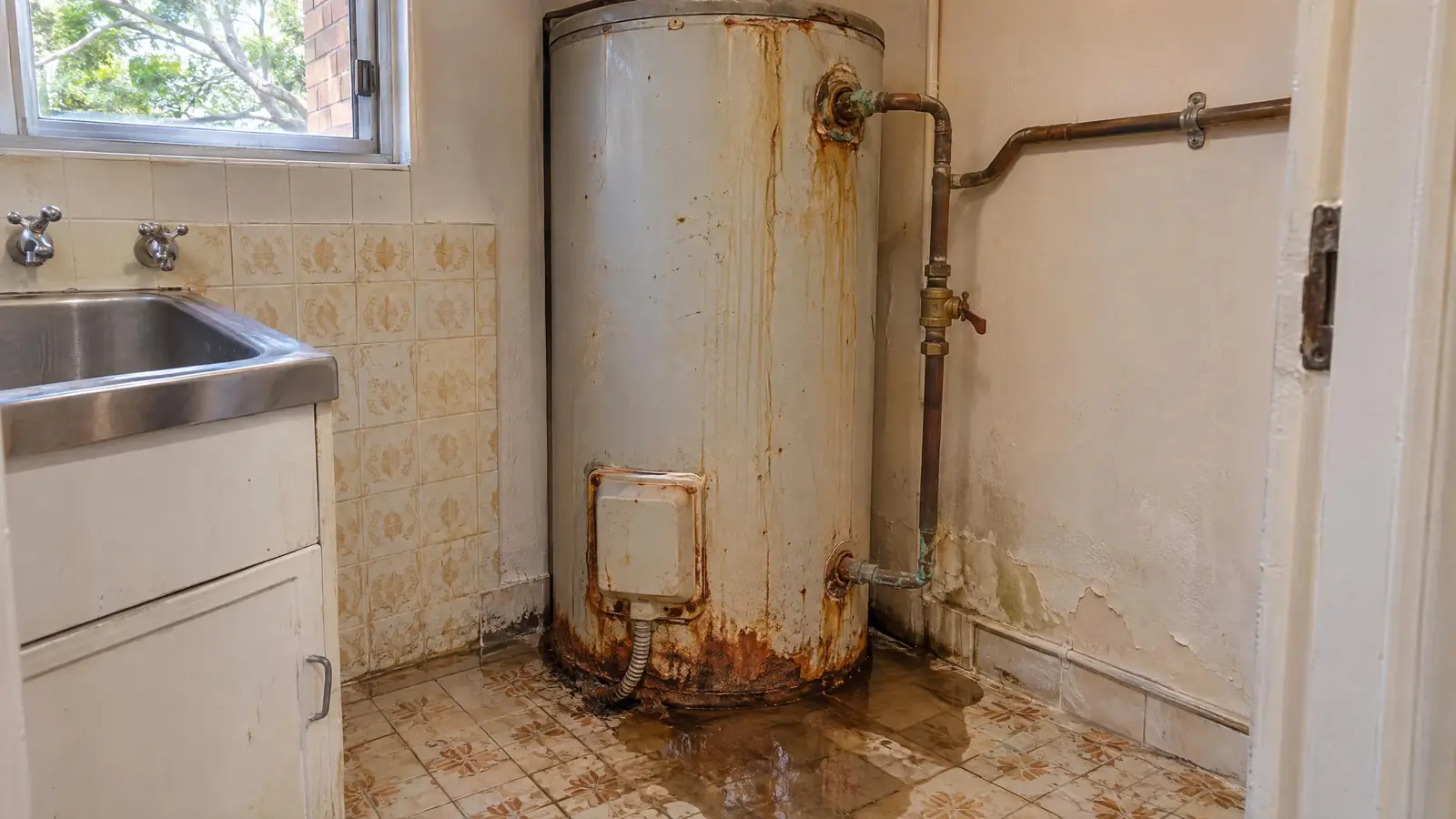
Illustration, not a Proximity job
A rusted, leaking electric storage unit, replaced with a new unit, new pipework and a tempering valve. Illustration, not a Proximity job.
Gas storage to continuous flow
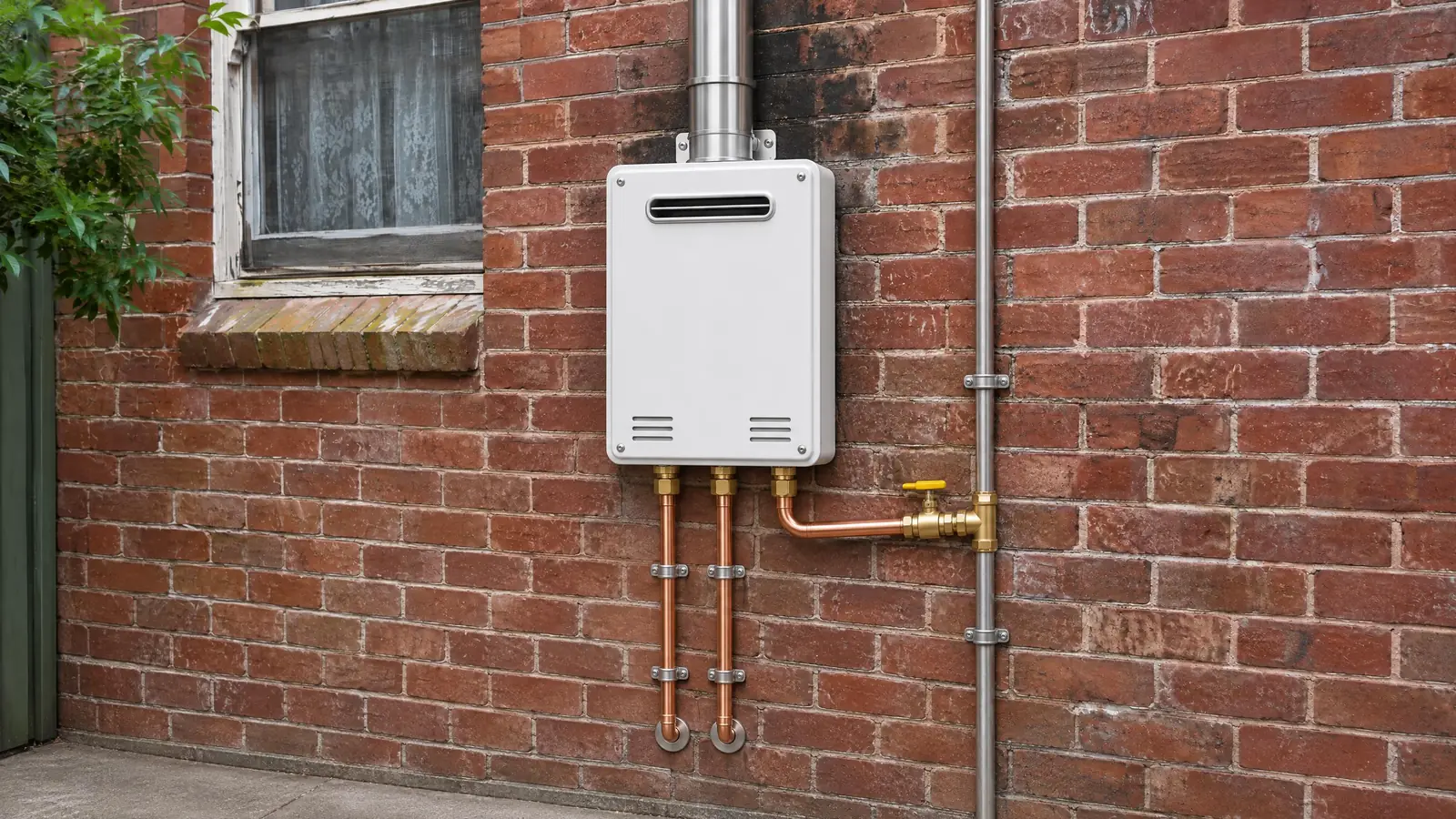
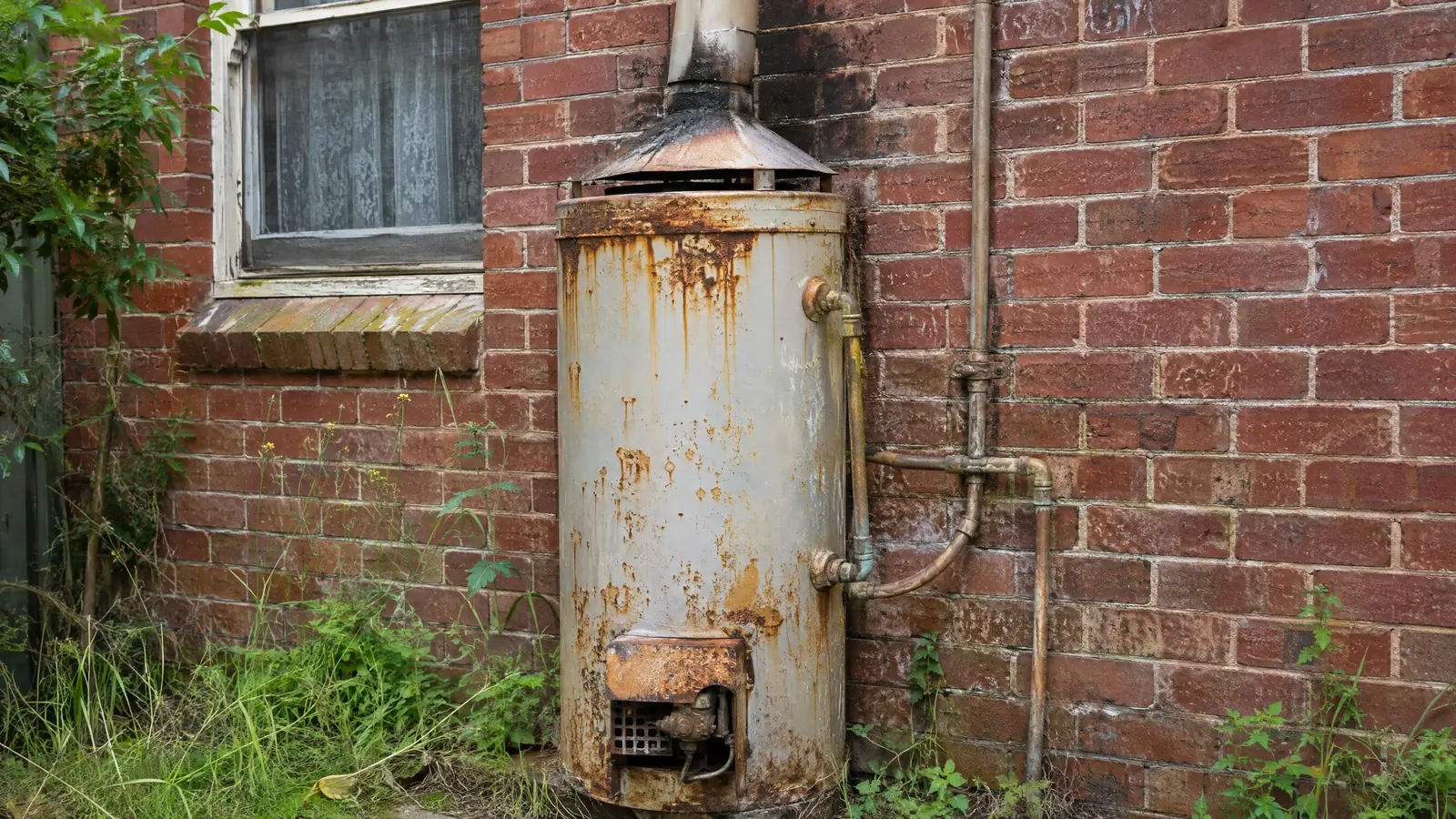
Illustration, not a Proximity job
A rusted gas storage heater, replaced with a compact continuous-flow gas unit. Illustration, not a Proximity job.
Electric to heat pump
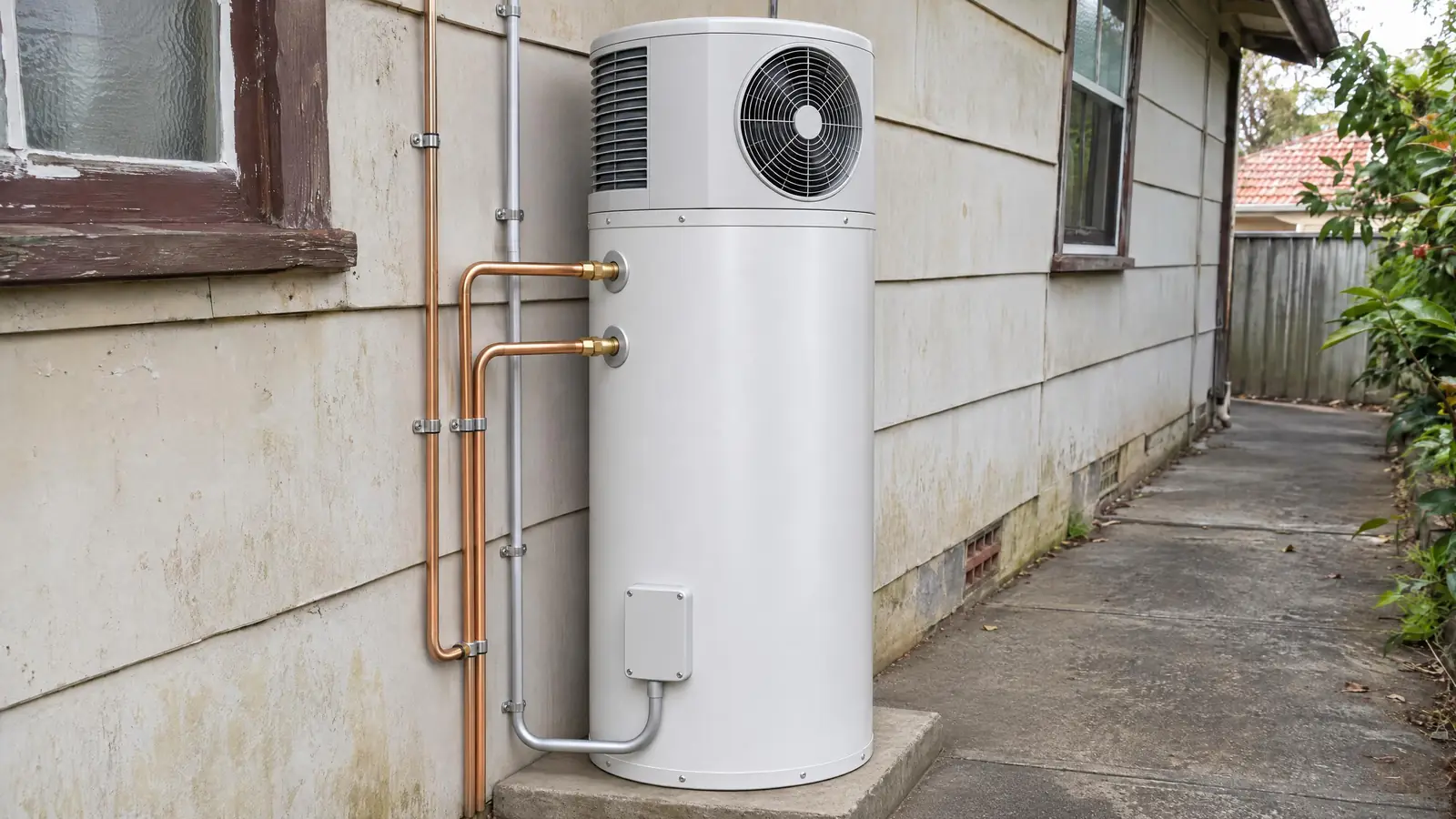
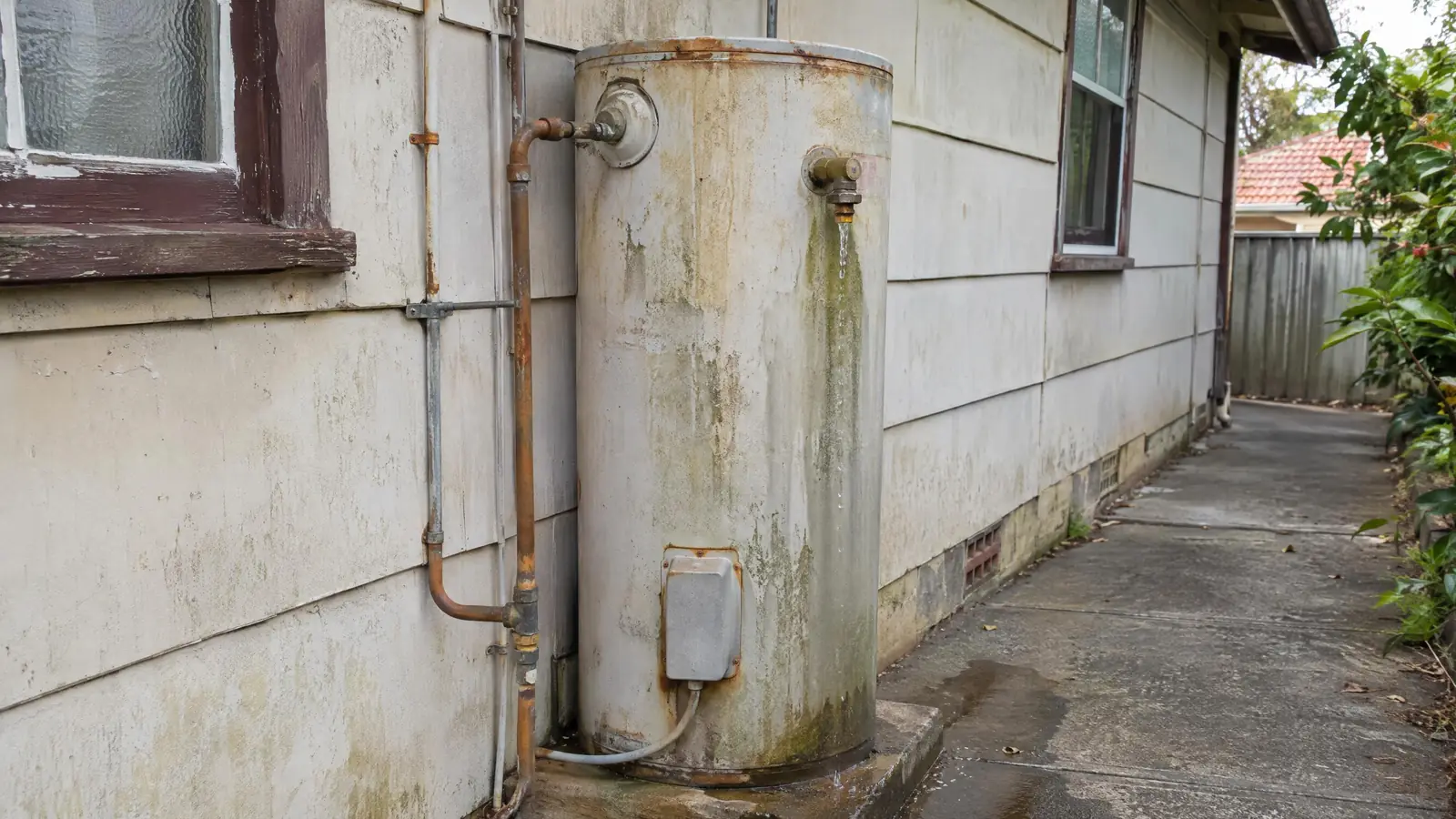
Illustration, not a Proximity job
An old electric storage tank, replaced with an energy-efficient heat pump. Illustration, not a Proximity job.
YOUR OPTIONS
Repair, central replacement or individual units
| Option | Best for | Pros | Cons | Disruption |
|---|---|---|---|---|
| Repair | Valves, pumps or a single failed unit | Lowest cost now | Does not fix an ageing plant | Low |
| Replace the central plant | Plant near the end of its life | New warranty; can be resized and made more efficient | Higher upfront cost; planned shutdown | Medium: planned around residents |
| Individual units per lot | Buildings changing their arrangement | Each lot controls its own | Space, flues and gas or power to each lot | High |
| Heat pump plant | Buildings moving away from gas, with space and electrical capacity | Usually lower running costs than electric element heating | Needs plant space, airflow and electrical capacity; higher upfront cost | Medium: planned like any plant change |
INSPECTION AND MAINTENANCE
Servicing and checks
| What | How often | Why it matters |
|---|---|---|
| Heaters, burners and elements | As the manufacturer’s instructions require, ideally before winter demand | Keeps the plant efficient and catches wear before it fails |
| Relief and tempering valves | At every plant service | In our records, faulty valves are among the most common hot water faults |
| Circulating pump and the flow and return loop | At every plant service, and whenever the upper floors run lukewarm | A stopped pump is the usual cause of slow, lukewarm hot water |
| Delivery temperatures at the outlets | At every service, and after any valve work | NSW sets a maximum temperature at the outlet, not at the heater |
| The age of each unit | Recorded once, then reviewed with the capital works plan | Most hot water systems last about 8 to 10 years |
COMPLIANCE AND STANDARDS
Safe temperatures
In NSW, heated water at outlets must be no hotter than 45°C in aged care, patient care areas, early childhood centres, school areas used by children and facilities for people with a disability, and no hotter than 50°C elsewhere, achieved to AS/NZS 3500.4 (National Construction Code, NSW). We set and test tempering valves and TMVs so outlets deliver safe temperatures, and give you a Certificate of Compliance for the work.
Replacing an existing hot water system does not need a Notice of Work, but a Certificate of Compliance is still issued for the work (NSW Government). Gas plant also needs a gas certificate lodged with Building Commission NSW within 5 business days (NSW Government). In hospitals, a warm water system must not be installed unless it is of a kind approved in writing by NSW Health (NSW Health).
PROCESS AND TIMELINE
How a plant replacement runs
1
Assess
Condition, demand and options.
2
Quote
Fixed price, with a plan for the shutdown.
3
Notice
Residents told the date and time.
4
Install
Old plant out, new plant in, usually within a day for like-for-like.
5
Commission
Temperatures, flow and valves tested.
WHAT IT COSTS
What hot water plant costs
Central hot water plant replacement in a strata or commercial building typically costs $10,000 to $50,000, depending on the number of units, the size of the building, gas or electric, and the flues and pipework needed. Repairs cost far less. You get a fixed price after we assess it.
Half of our 164 priced commercial and strata hot water jobs since 2019 cost between $348 and $2,999, including GST, with a median of $770. Half of our 19 priced commercial and strata hot water repair jobs since 2019 cost between $382 and $1,980, including GST, with a median of $462.
For the capital works plan, record each unit’s age and plan its replacement for the year it reaches 8 to 10, so the cost lands as a planned item and not an emergency. Keep enough capacity that one failed unit leaves the building with less hot water, not none.
HOW TO BRIEF US
How to brief us
- How many lots, tenancies or outlets the plant serves
- Photos of each heater’s data plate, so we know the make, model and age before we arrive
- Gas or electric, and where the gas meter or switchboard is
- What residents report: no hot water, lukewarm upper floors, or long waits at the tap
- Access to the plant room or roof, and the best window for a shutdown
- Any service records, warranties or earlier quotes
QUESTIONS TO ASK
Questions to ask about your plant
- What happens if one unit fails? Ask how much capacity the plant keeps in reserve.
- How old is each heater, and when should it be replaced? The answer goes straight into the capital works plan.
- Are the relief valves, tempering valves and circulating pump part of the service? They fail more often than the heaters themselves.
- Will the flue, the gas supply or the electrical capacity need upgrading? A change of heater type can mean work beyond the plant room.
- Which certificates will we receive? A plumbing Certificate of Compliance, and a gas certificate for gas work.
FROM OUR RECORDS
What our records show about hot water faults
Across our hot water jobs since 2019 where a cause was recorded, the most common were water leaks (60), faulty tempering valves (54), burst pipes (40), faulty elements or thermostats (22) and faulty pressure relief valves (11). Most of the recorded causes are in the valves and pipework around the heater, not the heater itself, which is why a plant service checks all of it.
CASE STUDY
From our job records
Strata · 1970s block, more than 25 lots, Bellevue Hill · March 2023
Central hot water upgrade for a Bellevue Hill strata building
The problem
The building relied on two outdated hot water storage units that kept breaking down.
What we did
We replaced them with commercial-grade instantaneous gas heaters, a new storage tank and a flow and return system, then tested and commissioned it.
Outcome
Pressure, flow and temperature all improved, with lower running costs.
QUESTIONS
Hot water plant questions
GUIDES
Guides and next steps
COMMERCIAL & STRATA
Explore Commercial & Strata
Who we help
Services

HOT WATER PLANT
Plan your plant replacement
Book a free health check of the plant, or log a job if the building has no hot water.
Planning ahead? Request our compliance pack, book a free building health check or invite us to your contractor panel.
Licensed NSW 285594C
24/7 priority response
Report and photos on every job
4.9 from 3,000+ Google reviews